1. Introduction: why becoming a VA in 2026 is a smart move

There’s a quiet shift happening in how people work. Offices are optional. Teams are global. And more businesses are being run from laptops than ever before.
Right in the middle of that shift sits the virtual assistant.
Not as a side role. Not as “just admin.” But as the operational backbone of modern, online businesses.
In 2026, becoming a VA isn’t about answering emails all day. It’s about helping founders move faster, stay organised, and keep their business running without friction. And the best part? You don’t need a degree, years of experience, or a perfect plan to get started.
You just need to be useful.
This guide will walk you through exactly how to go from complete beginner to your first paid VA client – step by step, without the fluff.
2. What is a virtual assistant (and what do they actually do?)

At its simplest, a virtual assistant is someone who supports a business remotely.
But that definition doesn’t quite capture the reality of the role anymore.
A modern VA is part organiser, part problem-solver, part systems thinker. You’re the person who keeps things from slipping through the cracks.
On a practical level, that might look like:
- Managing inboxes so nothing important gets missed
- Scheduling meetings and keeping calendars under control
- Handling customer queries or support messages
- Organising files, data, and internal systems
- Supporting content, social media, or research tasks
But here’s the 2026 shift: clients don’t just want tasks done, they want things to run smoothly.
That means VAs are increasingly expected to:
- Set up simple workflows
- Suggest better ways of doing things
- Use tools (and even AI) to save time
You’re not just helping. You’re reducing friction.
3. Why virtual assistance is still one of the best beginner careers
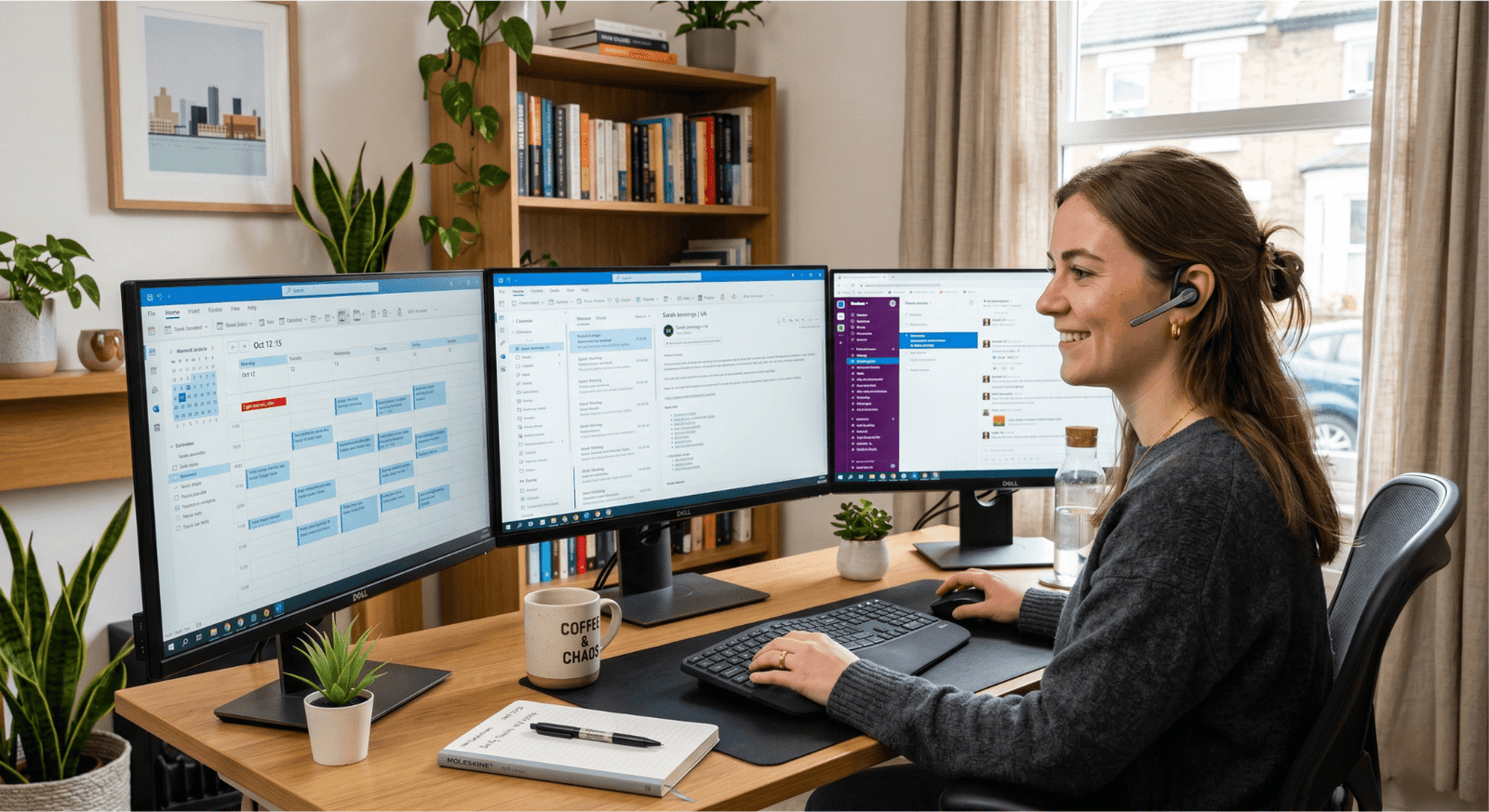
For all the talk about AI replacing jobs, virtual assistance has quietly stayed one of the most accessible ways to start working online.
Because businesses don’t just need automation. They need people who can think.
Becoming a VA is beginner-friendly for a few key reasons:
You don’t need formal qualifications
If you can communicate clearly, stay organised, and use a computer, you already have a foundation.
You can start with what you already know
Most beginners begin with simple admin tasks and build from there.
It’s flexible by design
You can work part-time, full-time, freelance, or alongside another job.
It scales with you
You might start with inbox management, but over time, you can move into higher-value services, better clients, and higher rates.
For career changers, parents returning to work, students, or anyone wanting out of rigid 9–5 structures, it’s one of the most practical entry points into remote work.
4. The core skills you need to start (2026 edition)
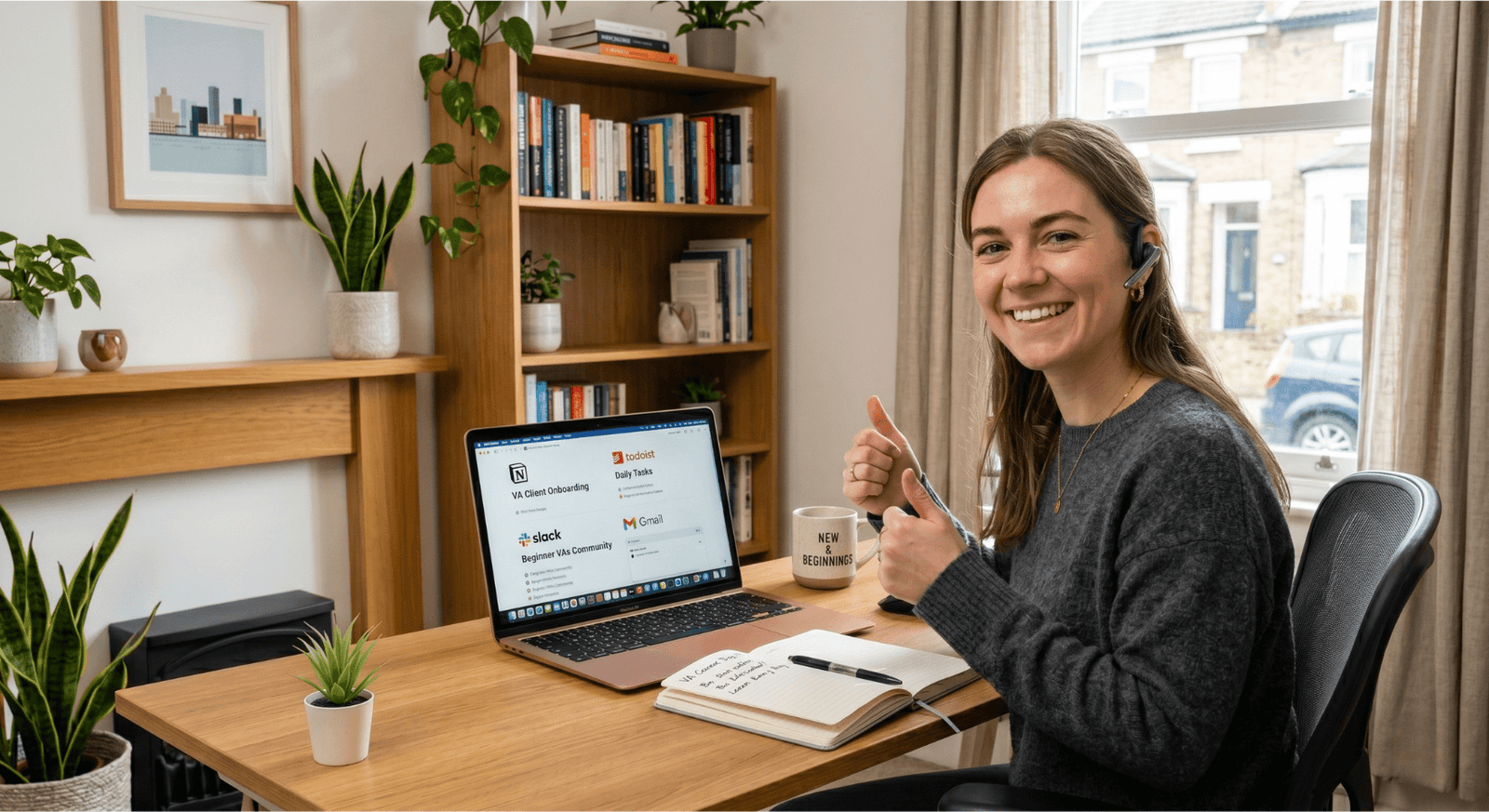
There’s a misconception that you need to “learn everything” before becoming a VA.
You don’t.
You need a small set of skills that make you immediately useful.
4.1 Soft skills (the real differentiators)
These are what actually get you hired – and kept.
- Clear communication – Clients need to understand you instantly
- Organisation – You’re managing moving parts, not just tasks
- Time management – Deadlines matter
- Reliability – Doing what you said you would do, consistently
- Problem-solving – Figuring things out without constant direction
You can learn tools quickly. These skills are what make clients trust you.
4.2 Practical digital skills
This is your toolkit – the things clients expect you to know (or learn fast):
- Google Workspace (Docs, Sheets, Drive, Calendar)
- Project tools like Trello, Asana, or ClickUp
- Scheduling tools like Calendly
- Basic familiarity with CRMs or client systems
You don’t need to master every platform. You need to be comfortable learning them.
4.3 The 2026 upgrade: AI literacy
This is where the role is evolving.
You don’t need to become technical. But you do need to understand how to use AI tools to:
- Draft and refine content
- Summarise information
- Organise data faster
- Support workflows
The key difference? Good VAs don’t rely on AI blindly. They use it to move faster, while still applying judgment.
That combination is what makes you valuable.
5. Services you can offer as a beginner VA
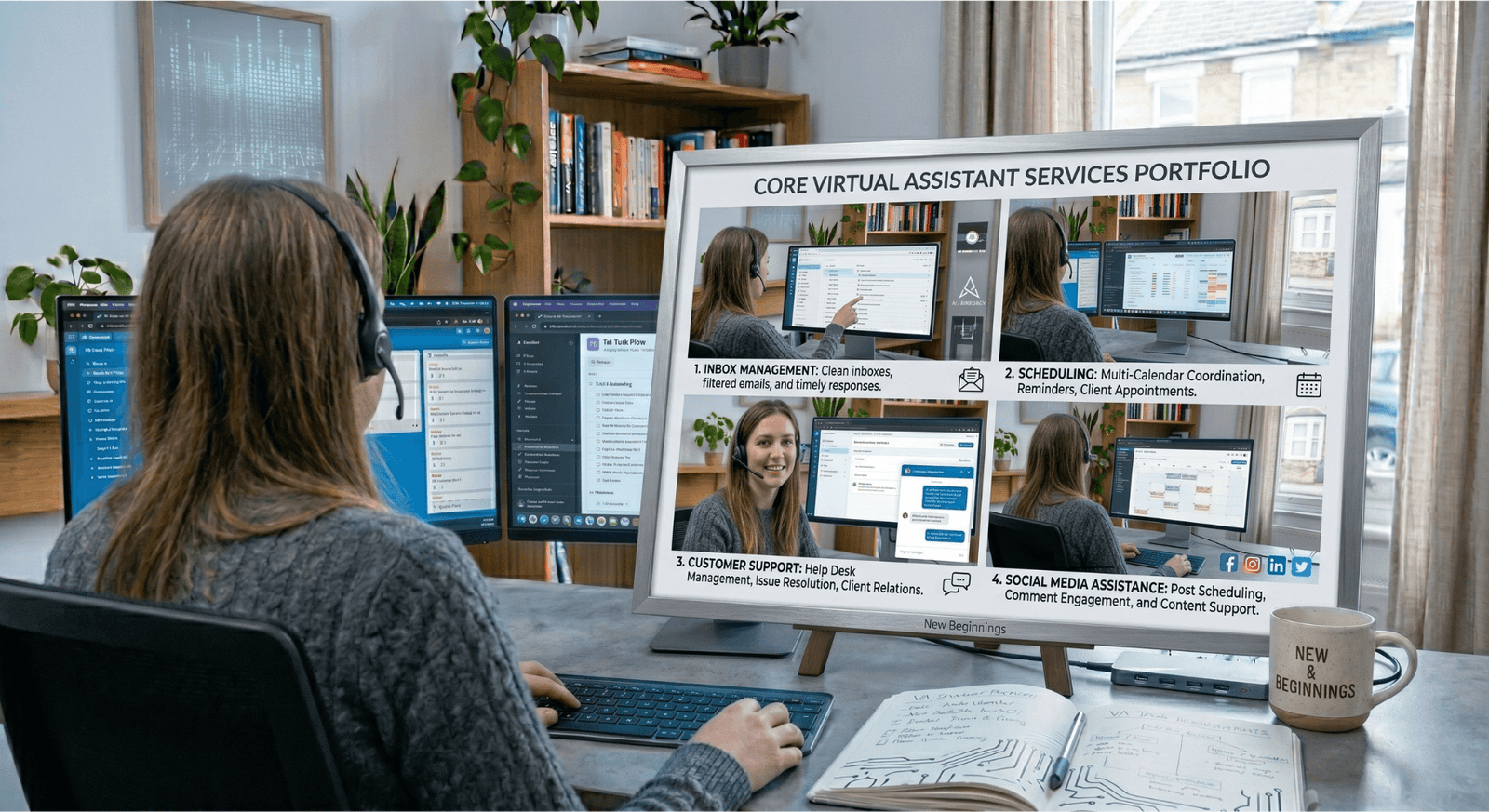
One of the biggest mistakes beginners make is trying to offer everything.
The fastest way to get hired is to keep it simple.
5.1 Start with clear, in-demand services
Focus on tasks businesses always need help with:
- Inbox and email management
- Calendar scheduling
- Data entry and organisation
- Online research
- Customer support
- Basic content or social media assistance
These are easy to explain. Easy to trust. And easy for a client to say yes to.
5.2 Then expand over time
Once you’re confident, you can build on that foundation:
- Email marketing support
- CRM management
- Project coordination
- Executive assistant work
You don’t need to start specialised. You grow into it.
5.3 A smarter way to position yourself
Instead of saying:
“I’m a virtual assistant who does admin…”
Say something like:
“I help busy founders stay organised by managing their inbox, calendar, and daily operations.”
Same work. Completely different perception.
Clarity sells.
6. Step-by-step: how to become a VA in 2026 (part 1)
The path isn’t complicated, but it does require action.
Step 1: Learn the basics and choose your starting point
Understand what VAs do and decide which services you can realistically offer first.
Step 2: Get comfortable with core tools
You don’t need mastery – just enough familiarity to complete real tasks confidently.
Step 3: Practice before you get paid
Create sample work:
- Organise a mock inbox
- Build a simple spreadsheet
- Plan a content calendar
This is how you bridge the gap between “learning” and “doing.”
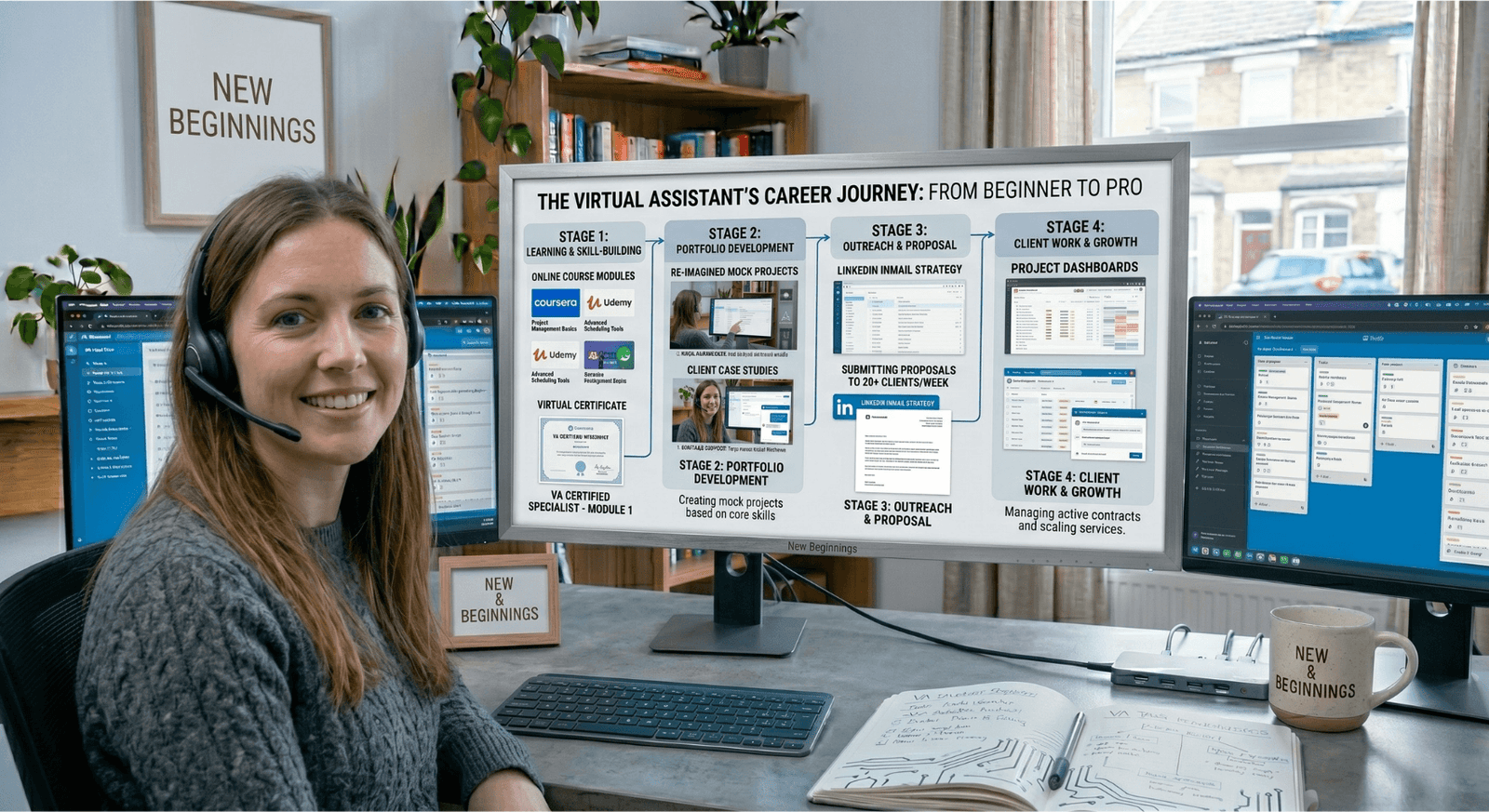
6. Step-by-step: how to become a VA in 2026 (part 2)
By now, you’ve built the foundation: you understand the role, you’ve chosen your core services, and you’ve practiced the basics.
Now comes the part that actually turns this into income.
Step 4: Build a simple portfolio
You don’t need clients to prove you can do the work.
You need proof that you understand the work.
A strong beginner portfolio might include:
- A sample inbox organisation system (folders, labels, filters)
- A clean, well-structured spreadsheet
- A mock content calendar
- A short case study: “Here’s how I would organise this business”
Keep it simple. Keep it clear. Focus on showing how you think.
Because clients aren’t just hiring skills – they’re hiring confidence.
Step 5: Create your online presence
This is where you position yourself as someone ready to be hired.
You don’t need a complicated website. You need:
- A clear bio (who you help + how)
- A simple list of services
- A professional email address
- A portfolio link or samples
Think of it less like a “brand” and more like a clear introduction.
If someone finds you, they should instantly understand what you do and who it’s for.
Step 6: Start reaching out (before you feel ready)
This is the step most people delay, and the one that matters most.
You do not need to feel confident. You need to start.
Begin with:
- Freelance platforms
- Job boards
- Direct outreach to small businesses
- Online communities where your ideal clients spend time
And keep your message simple:
“I help [type of client] with [specific problem] so they can [result].”
No long explanations. No overthinking.
Clarity gets replies.
Step 7: Learn while you earn
Your first client won’t expect perfection.
They expect reliability, communication, and effort.
As you start working:
- You’ll get faster
- You’ll understand real client needs
- You’ll improve naturally
This is where real growth happens, not in courses, but in doing the work.
7. How to build a portfolio (even with no experience)

Let’s make this clear: you do not need paid experience to get started.
What you need is proof.
A beginner VA portfolio works when it shows:
- You understand common tasks
- You can organise information clearly
- You can think through problems logically
Good examples include:
- A Google Drive setup for a “client”
- A weekly planning system
- A mock onboarding workflow
- A before-and-after example of organised data
Even helping a friend, a small business, or a personal project counts.
The goal isn’t perfection. It’s credibility.
8. Where to learn VA skills (without overcomplicating it)

You don’t need a £1,000 course to start.
You need focused, practical learning.
Free Options
- YouTube tutorials
- Blog guides
- Real-world walkthroughs of tools
Low-Cost Platforms
- Online learning platforms (short, practical courses)
- Skill-based programs focused on tools or workflows
The Most Underrated Method
Learn by doing.
Open the tools. Test things. Break things. Fix them.
That’s how you actually become confident.
9. How to find your first clients

This is where most beginners overthink – and slow themselves down.
Getting your first client is less about being “the best” and more about being clear and consistent.
Start with:
- People you already know
- Small businesses or solo founders
- Beginner-friendly job listings
- Online communities
And focus on this one idea:
Clients don’t hire VAs. They hire solutions.
So instead of listing tasks, speak to outcomes:
- “I’ll keep your inbox organised so nothing gets missed.”
- “I’ll manage your calendar so your week runs smoothly.”
Simple. Specific. Useful.
Then repeat the process consistently.
That’s what creates momentum.
10. How much you can earn as a beginner VA

There’s no single number, and anyone who gives you one is oversimplifying.
Your income depends on:
- Your skills
- Your niche
- Your confidence in selling your services
- The type of clients you work with
Most beginners start modestly, then increase their rates as they:
- Get faster
- Build trust
- Deliver better results
Over time, many VAs move away from hourly pricing and into:
- Monthly retainers
- Service packages
Because predictable income beats unpredictable hours.
11. Common mistakes to avoid
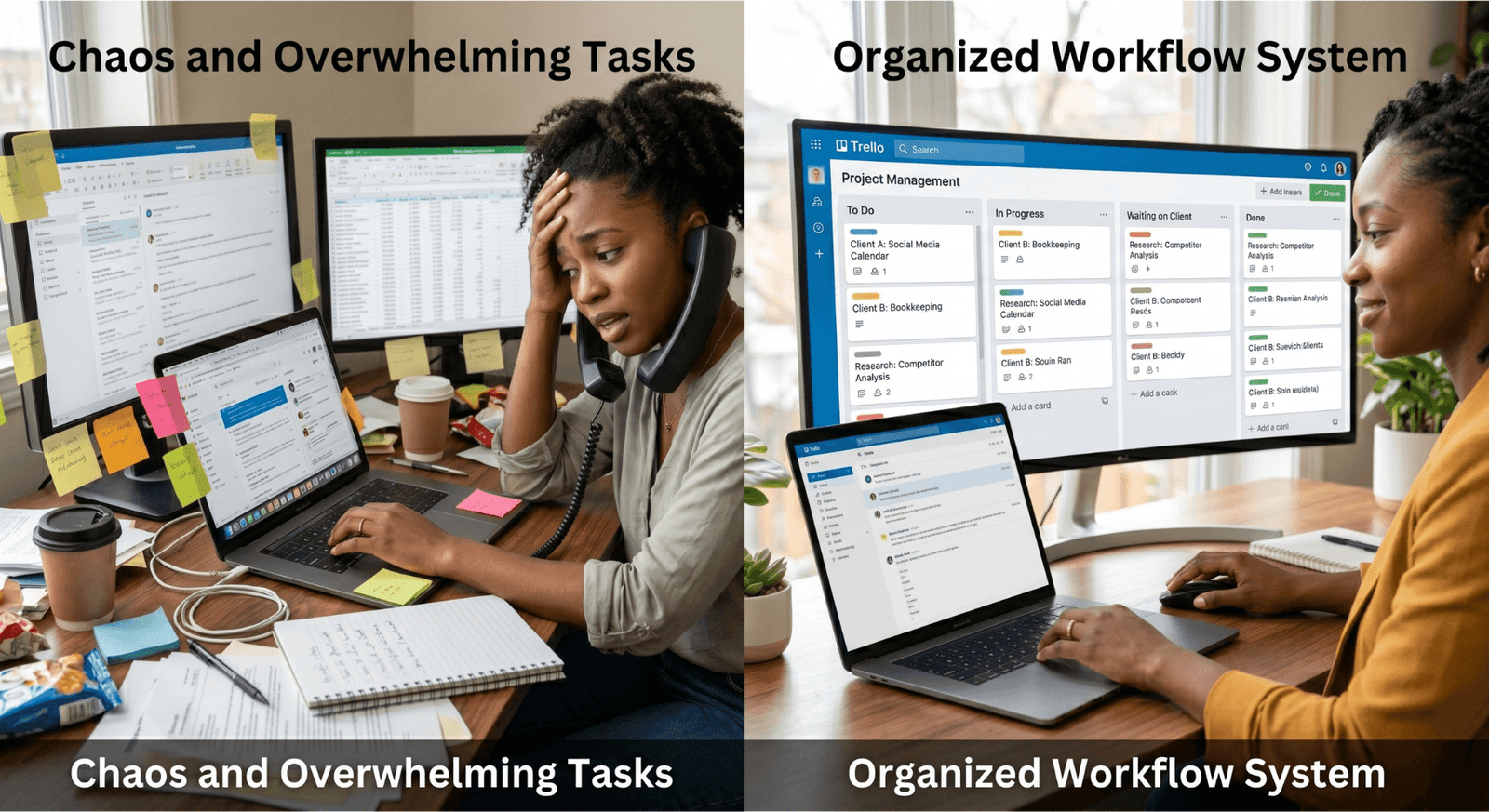
If you want to move faster, avoid these early traps:
Trying to do everything
You don’t need 10 services. You need 1–2 that you can do well.
Waiting until you feel “ready”
You’ll never feel fully ready. Action builds confidence.
Skipping a portfolio
Even basic proof is better than none.
Underpricing yourself long-term
Starting low is normal. Staying low is not.
Ignoring the tools clients actually use
Learn what’s relevant—not what’s trendy.
Avoiding AI and systems
In 2026, efficiency matters. The best VAs know how to work smart.
12. The real secret: focus beats everything

If there’s one takeaway from this entire guide, it’s this:
The fastest way to become a virtual assistant is not to learn everything.
It’s to become useful – quickly.
Pick a small set of skills.
Learn the core tools.
Offer one clear service.
Start before you feel ready.
Everything else comes from experience.
13. Conclusion: start before you overthink it

Becoming a virtual assistant in 2026 isn’t about having the perfect plan.
It’s about momentum.
You don’t need to know everything.
You don’t need years of experience.
You don’t need to wait.
You need to start.
Learn one skill.
Create one sample.
Send one message.
Because the difference between people who want to become a VA – and people who actually get paid – is simple:
One group waits.
The other begins.
Ready to hire a Virtual Assistant?
If you’re exploring virtual assistant agencies or need guidance on which model fits your business best – now is the time to take the next step.
Let’s find the right support for your workflow, growth, and peace of mind.
The right VA doesn’t just lighten your workload – they protect your momentum.
Why start from scratch when the right team is already trained and ready to plug into your workflow?
Get Started in 3 Easy Steps:
- Book a quick discovery call
- Tell us what your business needs
- Get matched with a trained VA – in days, not weeks
Let’s Build Your Support System
📩 Click here to schedule your consultation
📞 Prefer to talk? Contact us directly at 020 4586 6800
👉 Your next VA shouldn’t just save time – they should unlock growth.
Let’s make that happen. 🚀
FAQ: How to become a virtual assistant in 2026: the complete beginner guide
- Do I need experience to become a virtual assistant in 2026?
No. Most beginners start without formal experience. What matters more is showing you can do the work. A simple portfolio with sample tasks – like inbox organisation, scheduling systems, or spreadsheets – can be enough to get your first client. - How long does it take to get your first paying client?
It depends on how quickly you take action. Some people land their first client within a few weeks by focusing on a small set of services and applying consistently. The biggest delay usually comes from waiting too long to start reaching out. - What are the best skills to learn first as a beginner VA?
Start with the basics that clients always need:
- Email and inbox management
- Calendar scheduling
- Google Workspace (Docs, Sheets, Calendar)
- Basic organisation and communication
Once you’re comfortable, you can expand into more specialised services.
- Do I need to learn AI to become a virtual assistant?
You don’t need advanced technical knowledge, but basic AI literacy is becoming important. Knowing how to use AI tools to draft, organise, or speed up tasks can make you more efficient—and more valuable to clients. - Can I become a virtual assistant part-time or as a side hustle?
Yes. Many VAs start part-time alongside a job, studies, or other commitments. The role is flexible, so you can build experience and income gradually before deciding whether to go full-time.